Comparing Traditional Annual Checkups With Comprehensive Longevity Assessments
Routine preventive healthcare remains one of the most effective ways to reduce disease risk. Research from the U.S. Centers for Disease Control and Prevention (CDC) shows that regular preventive services can help detect chronic conditions earlier and improve long-term health outcomes. Yet as healthcare evolves, a growing discussion has emerged around whether traditional annual checkups provide enough information to support healthy aging throughout a person’s lifespan.
Conventional preventive care remains the foundation of modern medicine, while newer longevity-focused assessments aim to provide a deeper understanding of individual health risks before symptoms appear. Organizations operating in this expanding field, such as Good Gene Medical, reflect the broader trend toward more personalized health evaluation models that emphasize long-term wellness and risk reduction.
The debate between traditional annual examinations and comprehensive longevity assessments is not necessarily about choosing one over the other. Instead, it raises important questions about how healthcare systems can balance proven preventive practices with emerging technologies and personalized health strategies.
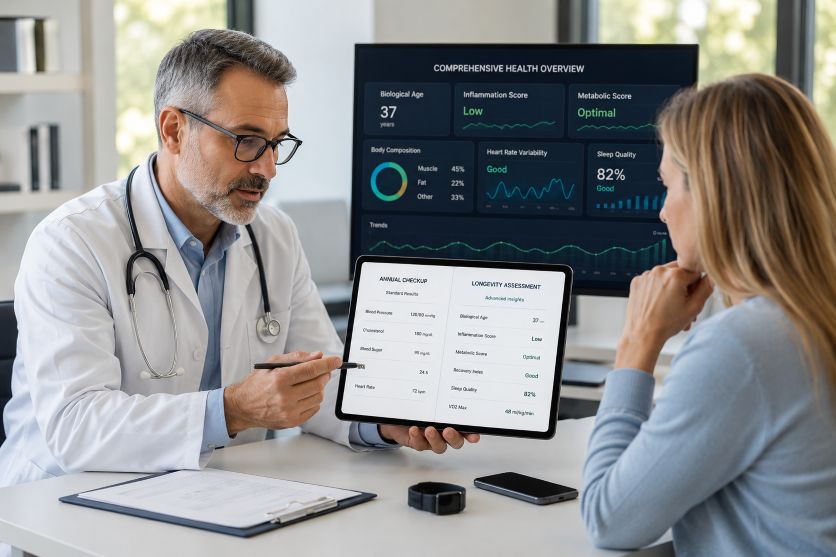
The Traditional Annual Checkup: A Proven Foundation
Annual wellness visits have long served as a cornerstone of preventive medicine. These appointments typically include a review of medical history, physical examination, blood pressure measurement, weight assessment, vaccination updates, and basic laboratory testing when appropriate.
Experts from the American Medical Association note that regular preventive visits help identify common conditions such as hypertension, diabetes, and cardiovascular disease. They also provide opportunities to discuss lifestyle factors including nutrition, exercise, smoking cessation, and mental health.
The strengths of traditional checkups are clear:
- Widely accessible through primary care providers
- Supported by decades of clinical evidence
- Focused on established preventive guidelines
- Cost-effective for many healthcare systems
- Effective for identifying common health concerns
However, critics argue that annual visits often provide only a snapshot of health at a single point in time. Standard evaluations may not capture subtle physiological changes, genetic predispositions, or early biomarkers associated with aging-related diseases.
The Rise of Comprehensive Longevity Assessments
Longevity-focused evaluations represent a newer approach to preventive healthcare. Rather than concentrating primarily on diagnosing existing conditions, these assessments seek to identify future health risks and optimize long-term wellness trajectories.
Programs vary considerably, but many include advanced laboratory testing, body composition analysis, cardiovascular imaging, metabolic assessments, genetic screening, sleep evaluations, and continuous monitoring through wearable devices.
Supporters argue that these expanded assessments provide a more detailed picture of an individual’s health status. Data from the National Institutes of Health (NIH) suggests that biological aging processes can begin years before clinical symptoms emerge, creating interest in earlier detection strategies.
The central philosophy behind longevity medicine is that identifying risk factors earlier may allow interventions before disease develops. This preventive mindset has gained attention as populations age and chronic diseases continue to place pressure on healthcare systems worldwide.
Comparing Testing Approaches
One of the most significant differences between traditional and longevity-focused evaluations lies in the breadth of testing performed.
Traditional Annual Checkups
- Basic blood chemistry panels
- Blood pressure screening
- Cholesterol monitoring
- Diabetes screening
- Cancer screenings based on age and risk factors
- Physical examination
Comprehensive Longevity Assessments
- Expanded biomarker panels
- Advanced cardiovascular imaging
- Genetic and genomic analysis
- Hormonal profiling
- Body composition measurements
- Continuous health monitoring through wearable technology
- Detailed lifestyle and environmental assessments
Advocates of traditional medicine caution that more testing does not automatically lead to better outcomes. The U.S. Preventive Services Task Force (USPSTF) emphasizes that screening recommendations should be supported by evidence demonstrating meaningful health benefits.
On the other hand, proponents of longevity medicine argue that advances in diagnostics may reveal risks that conventional screenings overlook. The challenge lies in determining which emerging tests provide actionable information and which may create unnecessary concern or healthcare costs.
Monitoring and Personalization
Another area of contrast involves ongoing monitoring and individualized care plans.
Traditional healthcare generally follows population-based guidelines. Physicians use age, sex, family history, and known risk factors to recommend screenings and preventive interventions. This approach has been highly successful in reducing mortality from several major diseases.
Longevity assessments often place greater emphasis on personalization. Wearable devices can track heart rate variability, sleep quality, physical activity, and other metrics continuously. Combined with laboratory data, practitioners may develop highly customized wellness plans tailored to specific risk profiles.
Research published by the World Health Organization (WHO) highlights the growing importance of person-centered healthcare models. These approaches seek to engage patients more actively in managing their health while accounting for individual circumstances and preferences.
Yet personalization presents challenges. More data can improve insight, but it can also complicate decision-making. Healthcare professionals must distinguish meaningful signals from normal biological variation.
Evidence Supporting Each Model
The strongest argument for traditional annual checkups is the substantial body of evidence supporting established preventive care measures. Vaccinations, blood pressure management, cancer screenings, and diabetes prevention programs have demonstrated measurable public health benefits over decades.
Longevity medicine, by comparison, is still developing as a field. Some components, such as cardiovascular risk assessment and metabolic monitoring, are supported by strong evidence. Other interventions continue to be studied, and long-term outcome data remain limited in certain areas.
Data from the Harvard T.H. Chan School of Public Health indicates that lifestyle factors including physical activity, healthy diet, adequate sleep, and tobacco avoidance remain among the most powerful predictors of longevity. These factors influence health outcomes regardless of whether an individual follows a traditional or advanced assessment model.
This reality suggests that sophisticated testing alone cannot replace fundamental preventive health behaviors.
Future Implications for Patient-Centered Medicine
The future of preventive healthcare may not involve a competition between traditional and longevity-focused approaches. Instead, the two models may increasingly complement one another.
Advances in artificial intelligence, wearable technology, genomics, and biomarker research are likely to improve risk prediction capabilities. At the same time, primary care providers will continue to play an essential role in delivering evidence-based preventive services and managing chronic conditions. As healthcare organizations explore new ways to support healthy aging and confidence, these innovations may help individuals make more informed decisions about long-term wellness while preserving the value of traditional preventive care.
Healthcare systems may gradually integrate selected longevity-focused tools into conventional practice as evidence accumulates. This evolution could allow more personalized care while maintaining the scientific rigor that underpins modern medicine.
For patients, the most valuable outcome may be greater access to information that supports informed health decisions. Whether through annual wellness visits, advanced health assessments, or a combination of both, the goal remains the same: helping individuals maintain health, independence, and quality of life for as long as possible.
Conclusion
Traditional annual checkups and comprehensive longevity assessments each offer distinct advantages. Conventional preventive care provides a proven framework supported by extensive clinical evidence, while longevity-focused evaluations seek deeper insight into individual health risks and aging processes.
The ongoing discussion reflects a broader shift toward proactive, personalized healthcare. As research continues and new technologies mature, healthcare providers may find opportunities to combine the strengths of both approaches. Such integration could support a future in which preventive medicine becomes increasingly tailored to individual needs while remaining grounded in evidence-based practice.